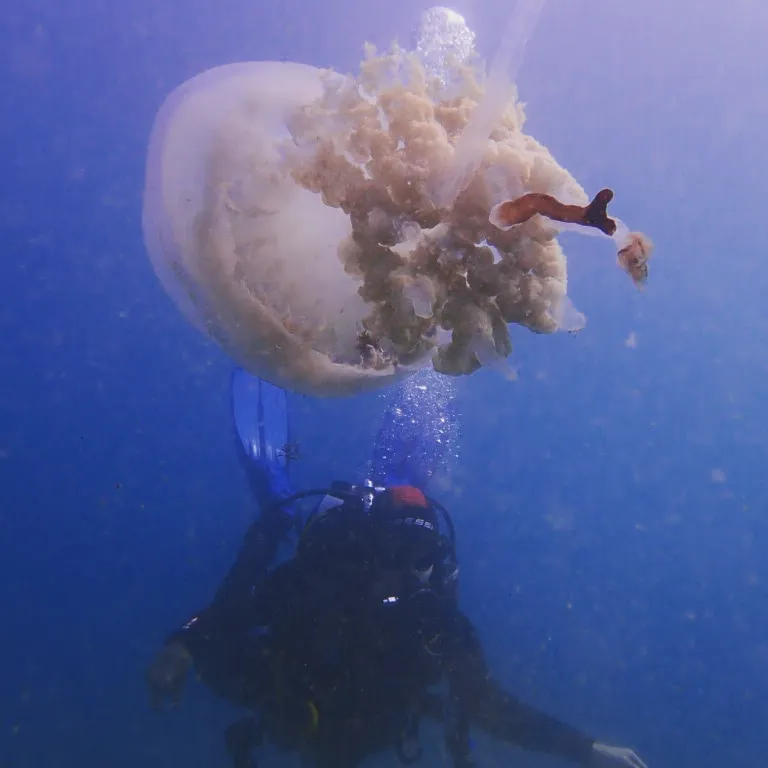
Barrel Jellyfish
·Rhizostoma pulmo
·Othercaution### 🪼 Barrel Jellyfish (*Rhizostoma pulmo*) in the Costa del Sol – Where to See Them Near
### 🪼 Barrel Jellyfish (*Rhizostoma pulmo*) in the Costa del Sol – Where to See Them Near Estepona & Sotogrande
Estepona & Sotogrande The Barrel Jellyfish (*Rhizostoma pulmo*) is one of the largest and most impressive jellyfish species found in the Mediterranean, and a striking encounter for divers along the Costa del Sol. Easily recognized by its thick, barrel-shaped bell and smooth milky-white to bluish body, it can reach over 50 cm in diameter, with long frilly oral arms trailing beneath instead of thin stinging tentacles. Along the southern Spanish coastline, Barrel Jellyfish are regularly observed around dive sites near Estepona, Casares Coast, Sotogrande, and San Roque. They are typically found in open water, from the surface down to around 30 meters, often drifting with currents near coastal reefs and drop-offs. Despite their size, Barrel Jellyfish are generally harmless to divers, as their stinging cells are weak and not dangerous to humans. Around Estepona and Sotogrande, they are often seen slowly pulsing through the water column or gathering in small groups during seasonal blooms. The best time to encounter them along the Costa del Sol is during warmer months, especially late spring and summer, when plankton levels increase and jellyfish populations rise. Calm conditions and good visibility around Casares and San Roque make it easier to appreciate their full form and movement. For divers, encountering a Barrel Jellyfish is both calming and impressive. Their slow, rhythmic pulsing creates a floating, almost hypnotic presence in the water, offering excellent wide-angle photography opportunities and a memorable glimpse into Mediterranean plankton-based ecosystems. Whether you’re diving near Sotogrande or exploring offshore waters around Estepona, spotting a Barrel Jellyfish is a classic Mediterranean experience and a beautiful example of the Costa del Sol’s seasonal marine life. The best conditions for jellyfish encounters occur during calm seas with good visibility, typically in early morning or late afternoon when they migrate vertically through the water column. Divers are captivated by their ethereal beauty and otherworldly movements, which create magical underwater moments. Their presence also indicates healthy marine ecosystems, making these encounters particularly meaningful for conservation-minded divers exploring Mediterranean waters.
The Barrel Jellyfish (*Rhizostoma pulmo*) is one of the largest and most impressive jellyfish species found in the Mediterranean, and a striking encounter for divers along the Costa del Sol. Easily recognized by its thick, barrel-shaped bell and smooth milky-white to bluish body, it can reach over 50 cm in diameter, with long frilly oral arms trailing beneath instead of thin stinging tentacles. Along the southern Spanish coastline, Barrel Jellyfish are regularly observed around dive sites near Estepona, Casares Coast, Sotogrande, and San Roque. They are typically found in open water, from the surface down to around 30 meters, often drifting with currents near coastal reefs and drop-offs. Despite their size, Barrel Jellyfish are generally harmless to divers, as their stinging cells are weak and not dangerous to humans. Around Estepona and Sotogrande, they are often seen slowly pulsing through the water column or gathering in small groups during seasonal blooms. The best time to encounter them along the Costa del Sol is during warmer months, especially late spring and summer, when plankton levels increase and jellyfish populations rise. Calm conditions and good visibility around Casares and San Roque make it easier to appreciate their full form and movement. For divers, encountering a Barrel Jellyfish is both calming and impressive. Their slow, rhythmic pulsing creates a floating, almost hypnotic presence in the water, offering excellent wide-angle photography opportunities and a memorable glimpse into Mediterranean plankton-based ecosystems. Whether you’re diving near Sotogrande or exploring offshore waters around Estepona, spotting a Barrel Jellyfish is a classic Mediterranean experience and a beautiful example of the Costa del Sol’s seasonal marine life. The best conditions for jellyfish encounters occur during calm seas with good visibility, typically in early morning or late afternoon when they migrate vertically through the water column. Divers are captivated by their ethereal beauty and otherworldly movements, which create magical underwater moments. Their presence also indicates healthy marine ecosystems, making these encounters particularly meaningful for conservation-minded divers exploring Mediterranean waters.
Spotted at These Dive Sites
Coming soon — dive sites integration.